
I came across a set of recent numbers that felt both surprising and, at the same time, completely expected.
According to data from market research firm Apptopia, ChatGPT’s share of the U.S. mobile chatbot market dropped below 40% in March 2026. Just a few months earlier, in September 2025, it was still comfortably above 50%. But Claude’s rise comes with controversy — Alibaba has now banned all Anthropic products internally after revelations that Claude Code secretly fingerprinted Chinese users. And if you’re using AI agents, be aware that they cost 10-50x more tokens than chatbots.
Meanwhile, Claude’s power users are spending significantly more time in the app—average daily usage jumped from 98 minutes in February to 139 minutes, while churn among heavy users fell to just 12%.
The AI assistant market isn’t standing still. It’s quietly shifting. For how AI is being built into Windows PCs right now, see AI PC overview and Click to Do on TheWindows12.
ChatGPT’s Shift: From “Default Choice” to “One of Many AI Tools”
I’m not someone who chases every trend, so by the time I realized people were seriously switching to Claude, it had already been happening for months.
To be clear, ChatGPT still has major strengths: first-mover advantage, strong brand recognition, and the technical lead it built during the GPT-4 era. But as tools like Claude, Gemini, and Grok continue improving, that edge is no longer as dominant.
At the same time, Claude’s advantage in long-form reasoning and document understanding has become a deciding factor for many advanced users. For them, this isn’t a “nice-to-have”—it directly impacts whether the tool is usable for real work.
I know several indie developers who gradually switched to Claude over the past year. One of them told me something that stuck: when writing code, Claude’s ability to handle large context windows makes it hard to go back to anything else.
That says a lot about where things are heading.
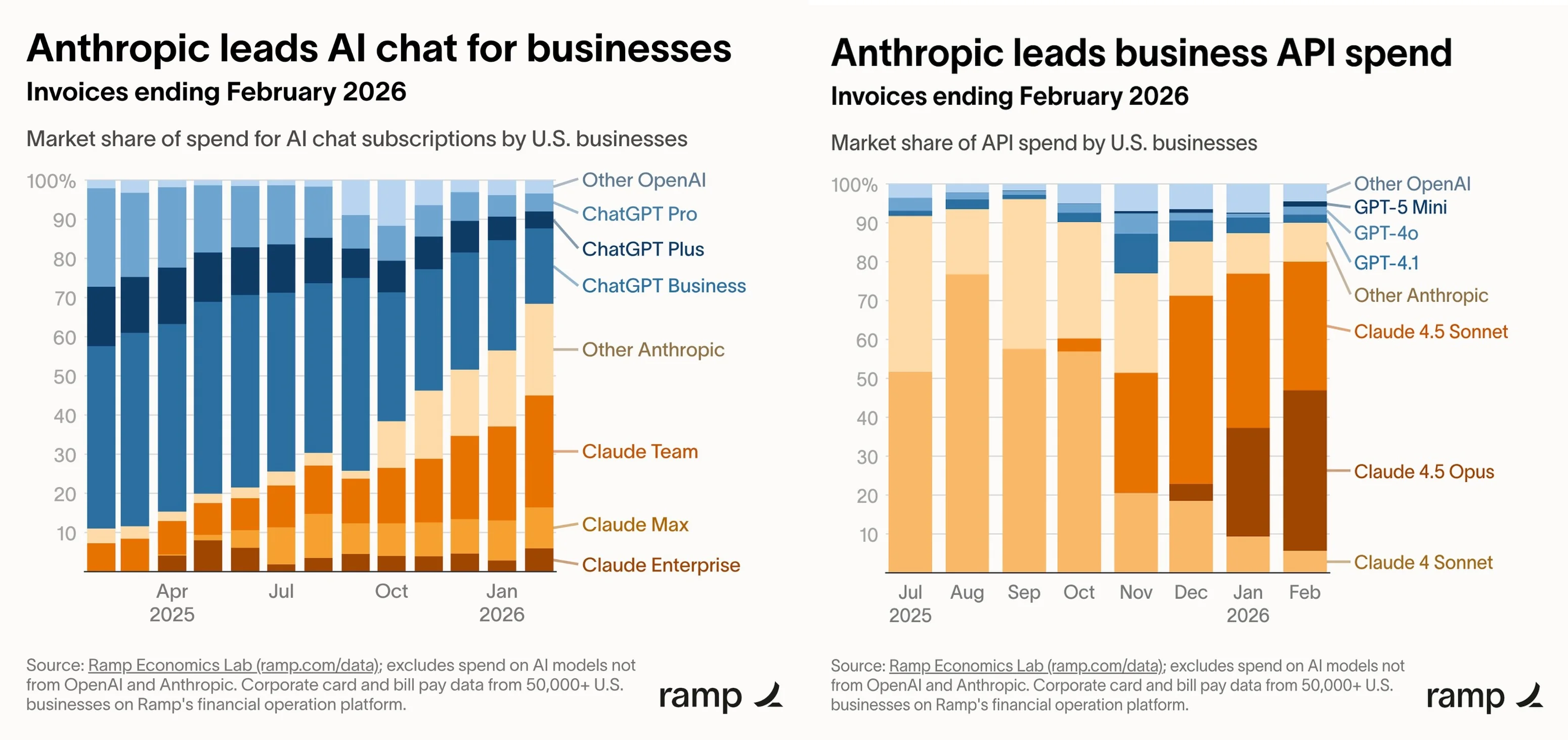
Why Claude Is Growing: Not Hype, but Depth
One detail in the data stood out to me: Claude’s user retention is improving significantly, with churn dropping to 12%.
That suggests something important.
Claude’s growth isn’t driven by a wave of new users trying it out—it’s driven by existing users going deeper and relying on it more over time. That’s a much healthier growth pattern.
And it makes sense. Claude’s product philosophy has always leaned toward getting real work done quietly. There’s less emphasis on flashy features or aggressive marketing, and more focus on improving model performance, expanding context windows, and delivering a stable experience.
Back when ChatGPT was rapidly expanding and adding features at high speed, this approach may have seemed like a disadvantage. But in 2026, as the AI assistant market matures, it’s starting to look like a strength.
My Take: Don’t Pick One—Use the Best AI Tool for Each Task
Personally, I don’t see this as a “winner-takes-all” situation. Right now, I use multiple AI tools depending on the task.
ChatGPT is still my go-to for quick answers, brainstorming ideas, and anything that requires up-to-date information. Its ability to combine real-time knowledge and fast responses is still hard to beat.
Claude, on the other hand, is what I reach for when I need to write long-form content, analyze complex documents, or review code. Its depth of understanding makes it one of the most reliable AI tools I’ve used.
Gemini works well if you’re already in the Google ecosystem—it’s convenient and integrates smoothly.
As for Grok, I haven’t found myself using it much lately.
This isn’t about which AI assistant is “the best.” It’s about which AI tool is best for your specific workflow.
The Best Time for AI Assistants Is Just Beginning
Think back to late 2022, when ChatGPT first launched. A lot of people believed it was the final form—one AI assistant that could do everything.
Three years later, we have more options and a clearer understanding of what each tool does well—and where each one falls short. That’s a good thing.
ChatGPT losing market share doesn’t mean it’s failing. Claude gaining traction doesn’t mean it has already won.
What it does mean is this: the AI assistant space is entering a more competitive, more mature—and ultimately more useful—phase.
And the best part? We’re still at the beginning.
