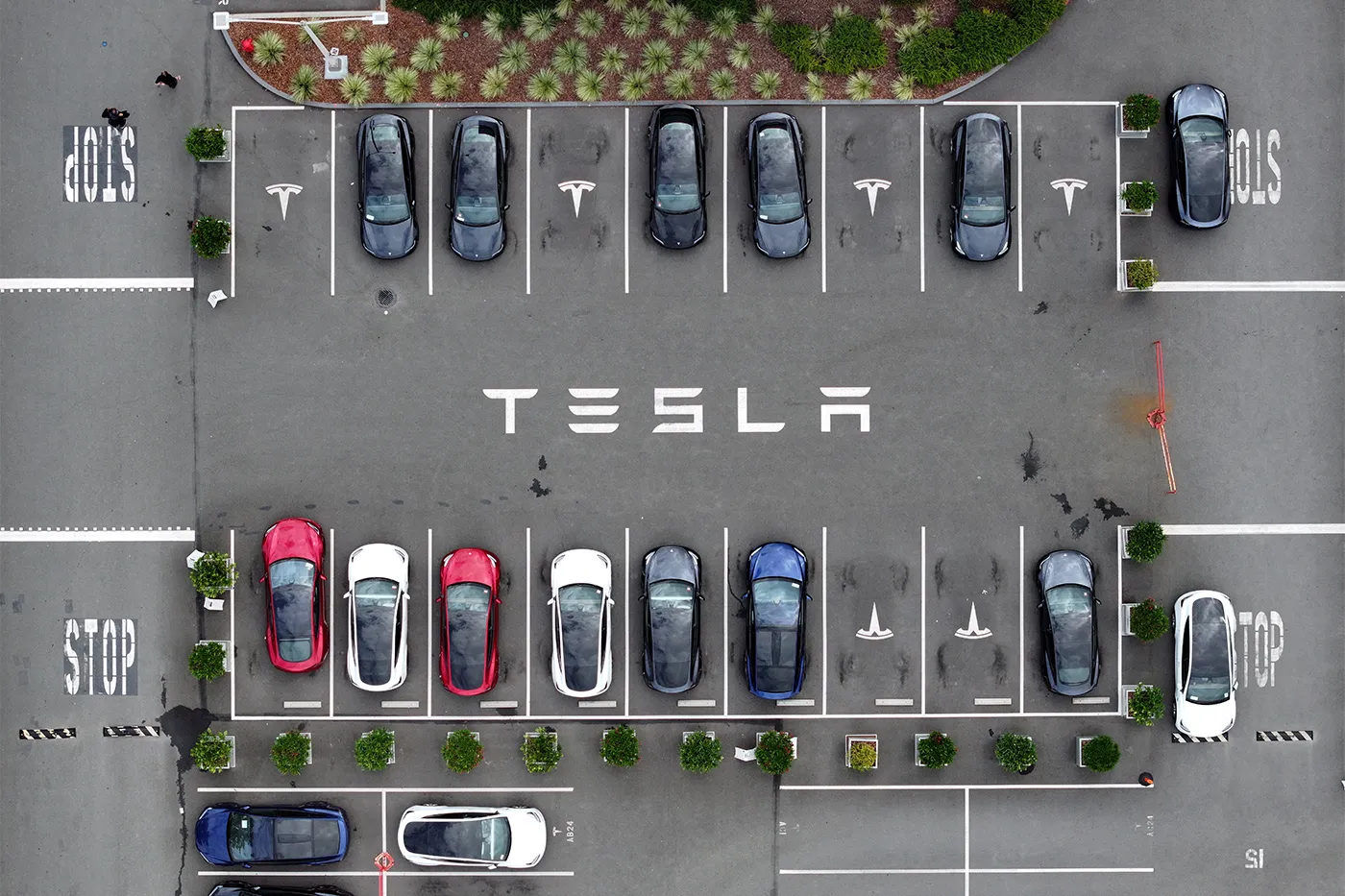
Autopark technology has emerged as one of the key developments in the automotive industry, specifically designed to assist drivers in complex parking situations, such as narrow parking spaces, crowded city streets, or busy shopping centers.
Parking difficulty is a common pain point in urban transportation, often causing anxiety for drivers when faced with tight spots. Manual parking not only requires extra effort but can also lead to vehicle damage. Autopark technology, through the use of advanced sensors, cameras, and software algorithms, allows the vehicle to park automatically, significantly improving convenience and safety for drivers.
Does Tesla Support Autopark?
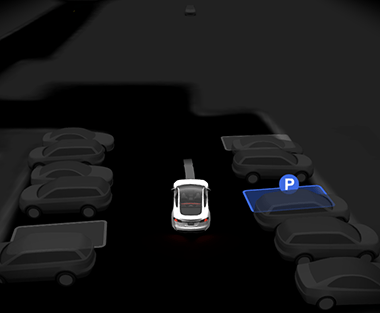 As a leader in the electric vehicle industry, Tesla has developed a range of advanced driver-assistance features, including the Autopark function. Tesla first introduced Autopark in 2015 as part of its Autopilot system. Initially, the feature supported parallel parking, but with subsequent software updates, it expanded to include perpendicular parking and introduced other advanced features like Smart Summon.
The Autopark function uses sensors and cameras around the vehicle to scan for available parking spaces and automatically calculate the parking trajectory. Drivers simply need to bring the vehicle near a potential parking spot, and the system will detect if a suitable space is available and prompt the driver to activate the Autopark process.
Overview of Tesla’s Autopark Technology
Tesla’s Autopark technology has evolved over the years, expanding from basic parallel parking to more complex scenarios. Currently, Tesla offers the following related features:
- Autopark
- Advantages: The vehicle can automatically identify suitable parallel or perpendicular parking spots. Drivers only need to confirm the parking operation, and the car takes care of steering, acceleration, and braking. This reduces the risk of parking accidents and alleviates driver stress.
- Disadvantages: The accuracy of the Autopark feature depends on the sensors and cameras. If the parking space is too complex or the environment has interfering obstacles (like other vehicles or pedestrians), the success rate of parking may decrease. Moreover, the technology currently cannot fully support multi-level parking garages or fully autonomous parking in unattended areas.
- Summon
- Advantages: Through the Tesla app, drivers can move their vehicles in and out of parking spaces autonomously. This feature is particularly useful in tight spaces or when obstacles are blocking access to the car. It’s ideal for situations where getting into the car would be difficult, such as when the door is too close to a wall or another vehicle.
- Disadvantages: The Summon feature works within a limited range, and the vehicle can only move short distances. Additionally, it still requires the driver to be within visual range to monitor the car, so it’s not fully autonomous.
- Smart Summon
- Advantages: Smart Summon expands upon the Summon feature, allowing the vehicle to drive autonomously in a larger parking area, avoiding pedestrians and obstacles to reach the driver. Operated through the Tesla app, the driver doesn’t need to manually control the vehicle’s steering.
- Disadvantages: While Smart Summon can theoretically navigate a parking lot, its performance in real-world environments is affected by factors like the complexity of the lot and network signal strength. The vehicle moves at a slow pace, which can cause traffic buildup in busy parking lots.
Comparison of Tesla’s Autopark with Other Brands
To better understand Tesla’s strengths and weaknesses in autopark technology, here’s a comparison with other premium automakers, like BMW, Mercedes-Benz, and Audi. This table highlights key features across different brands:
| Brand/Feature | Autopark Type | Sensor Types | Smart Summon | Expandability | Driver Intervention Required |
|---|---|---|---|---|---|
| Tesla | Parallel, Perpendicular | Cameras, Ultrasonics | Yes | OTA Software Updates | Low |
| BMW | Parallel, Perpendicular | Lidar, Ultrasonics | No | Limited by hardware | Medium |
| Mercedes-Benz | Parallel, Perpendicular | Cameras, Radar | No | Limited by hardware | Medium |
| Audi | Parallel, Perpendicular | Ultrasonics, Lidar | No | Limited by hardware | High |
From the table, it’s clear that Tesla holds a significant advantage in its Smart Summon feature and over-the-air (OTA) software updates. Tesla’s reliance on a combination of cameras and ultrasonic sensors allows it to enhance features via software updates, whereas some competitors are limited by their hardware capabilities.
Tesla Models That Support Autopark
Tesla’s Autopark feature is available across its main electric vehicle models, as outlined below:
- Model S
- Fully supports Autopark for both parallel and perpendicular parking.
- Both Summon and Smart Summon features are available.
- Model 3
- Includes parallel and perpendicular Autopark, ideal for everyday driving.
- Summon and Smart Summon functions are also supported, performing well in smaller parking lots.
- Model X
- As Tesla’s luxury SUV, Model X offers the same comprehensive Autopark features as the Model S, suitable for precise parking with a larger vehicle.
- Supports both Summon and Smart Summon for larger parking environments.
- Model Y
- Autopark, Summon, and Smart Summon features are all available, making it a versatile option for families and urban drivers.
These models rely on Tesla’s Autopilot hardware, and vehicles equipped with the latest Autopilot hardware (such as HW3.0 or higher) will see even better performance in Autopark functionality.
The Current Status of Tesla’s Autopark Development
Over the years, Tesla has made significant strides in developing its Autopark technology. In addition to technical advancements, Tesla continuously improves the safety and performance of Autopark through over-the-air (OTA) updates. However, Tesla’s Autopark feature has not been without controversy.
For example, in 2020, there were several minor incidents involving Tesla’s Smart Summon feature, which sparked public debates about the reliability of the technology in real-world scenarios. Despite these challenges, Tesla has continued to enhance the system’s stability and detection accuracy through software updates, improving the vehicle’s ability to handle complex parking environments.
Tesla’s long-term goal is to integrate fully autonomous driving capabilities, and Autopark is a key part of that vision. The company aims for a future where vehicles can park themselves in complex scenarios without any human intervention—potentially even finding a parking space independently. While this vision is still under development, Tesla continues to lead the industry in pushing the boundaries of autonomous driving technology. For a broader perspective on what autonomous driving really needs, see our article on why V2X communication is the most important technology for self-driving.
