In recent days, a growing number of iOS users have reported seeing an Telegram in-app message urging—or effectively requiring—them to update to Telegram version 12.2.4, warning that older versions “may stop working soon.”
This is the screenshot of the update message:
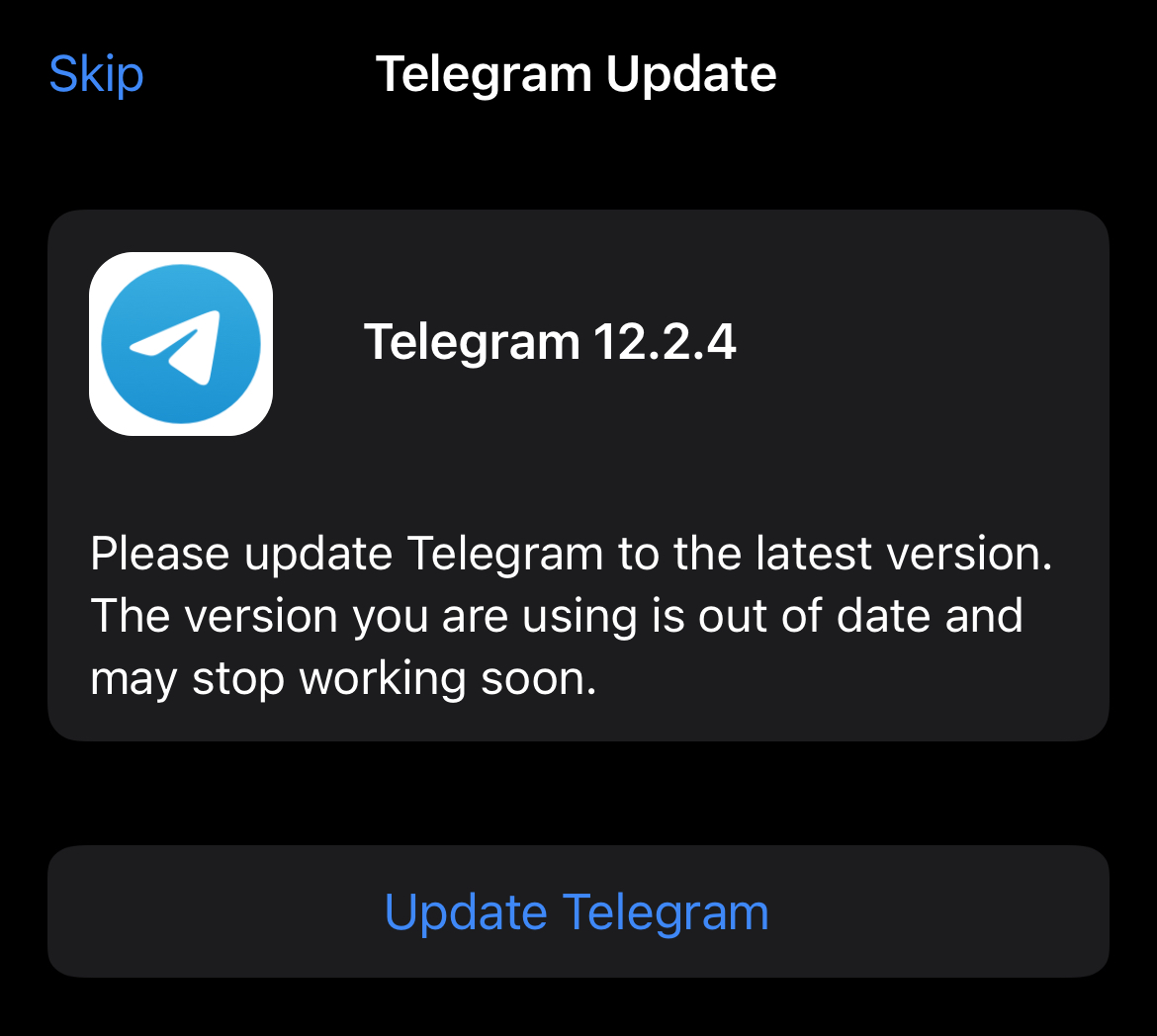
The notice has sparked widespread discussion across forums and social media, with users questioning whether the update is linked to security vulnerabilities, government pressure, or potential privacy risks. Here’s what we currently know—and what remains unclear.
Is Telegram Forcing Updates? How Unusual Is This?
Telegram typically releases frequent updates, most of which are optional and focus on new features or minor bug fixes. Explicit warnings suggesting that an app may soon become unusable without updating are relatively rare for Telegram, though not unheard of in the broader software industry.
Such notices usually appear when:
- Older client versions become incompatible with backend changes
- Critical stability or protocol updates are introduced
- Security-related fixes need to be deployed quickly
While not routine, this type of update prompt is not unprecedented for large-scale messaging platforms.
Is This Update Triggered by a Security Vulnerability?
At this time, there is no public evidence confirming that Telegram 12.2.4 patches a known, actively exploited security vulnerability.
- Telegram has not published a security advisory stating that the update is mandatory for safety reasons
- No clearly attributed CVE (Common Vulnerabilities and Exposures) has been publicly linked to version 12.2.4
- Major security databases and agencies have not issued alerts referencing this release
That said, Telegram remains a high-profile target for security research and attacks. The absence of public disclosure does not necessarily rule out security-related motivations, but there is currently no verifiable proof that this update was driven by an ongoing exploit.
Is Government Policy or Regional Regulation Involved?
There is no indication that the update requirement stems from a direct mandate by any specific government or regulator.
When regulatory or legal changes affect a global platform, they are typically accompanied by:
- Official statements or policy updates
- Coverage by major media outlets
- Region-specific feature removals or restrictions
None of these signals have appeared in connection with the 12.2.4 update. While Telegram does enforce regional compliance rules for certain services (such as payments or crypto-related features), these operate at the feature level, not as a universal app update requirement.
What’s New in Telegram 12.2.4?
Telegram has not released a detailed standalone changelog specifically for version 12.2.4. Based on available release notes and stable build announcements, the update appears to focus on:
- Bug fixes and performance improvements
- Stability and backend compatibility updates
- Minor adjustments related to recently introduced features
There is no evidence that the update introduces:
- Mandatory real-name registration
- Changes to Telegram’s core encryption model
- New default data-collection practices
As with many minor releases, documentation remains brief and maintenance-focused.
Does This Update Affect User Privacy?
This is one of the most common concerns—and also one of the most misunderstood.
Updating to Telegram 12.2.4 does not, by itself, require users to submit personal identification or link their real identity.
It is important to distinguish between:
- The Telegram app itself, and
- Optional services within Telegram, such as crypto wallets or payment features
Some optional features may require identity verification (KYC) in certain countries due to financial regulations. These requirements are feature-specific and not tied to the app version as a whole. Users who do not use these services are not affected.
Telegram’s core privacy model—anonymous accounts tied to phone numbers, optional usernames, and end-to-end encrypted chats—remains unchanged.
What Should Users Do?
Recommended Actions
- Update Telegram via official sources (App Store)
- Review app permissions after updating and disable anything unnecessary
- Enable two-step verification for additional account security
What Not to Do
- Panic over claims of “forced identity verification” without evidence
- Install modified or unofficial Telegram clients from unknown sources
- Spread unverified rumors about surveillance or account takeovers
Bottom Line
While Telegram’s prompt to update to version 12.2.4 has understandably raised concerns, there is currently no evidence that it signals a major security breach, government intervention, or a fundamental shift in user privacy.
The most likely explanation is a technical or compatibility-driven update being enforced more assertively than usual.
As always, the situation may evolve. If Telegram releases further clarification—or if security researchers disclose new findings—the assessment may need to be revisited. For now, updating through official channels remains the safest and most practical course of action.
You may also like: How to Enable Sensitive(18+) Content on Telegram