What Is AI Actually For?
Tech giants will spend $650B+ on AI in 2026 while OpenAI loses billions. A grounded look at what AI is actually for, and where the value really is.

- Louis
- 9 min read
- Affiliate Disclosure

Global tech companies are on track to pour over $650 billion into AI infrastructure in 2026. Nvidia GPUs are sold out before they ship. Data centers are competing with residential grids for electricity. OpenAI lost $8 billion in a single year and is still spending like there’s no tomorrow.
Everyone is sprinting. Almost nobody is asking what happens at the finish line. For a consumer-side view of where AI is landing right now, see Understanding AI PC and Windows Click to Do on TheWindows12 — practical AI features you can use on your PC today.
Two Different Roads
The US and China are both all-in on AI. But they’re heading in completely different directions.
The American approach is straightforward: build one general-purpose model that does everything. ChatGPT writes articles, Midjourney generates images, Sora produces video — same underlying logic, same endgame. Make AI into a universal intelligence. This is the AGI play.
China is doing something different. They’re building large models too, but the real focus is pushing AI into factories, shop floors, and every tangible production process they can find. In 2025, China installed 295,000 industrial robots — 54% of the global total. The US? 34,200 units, about 6%. That’s nearly a 9x gap.
This divergence didn’t happen overnight. Back in 2021, when Zuckerberg rebranded Facebook as Meta and went all-in on the metaverse, what was China doing? Installing robotic arms and vision inspection systems on factory floors.
One side was building a virtual world. The other was rebuilding the real one. The fork in the road was already visible back then.
Why the US Bet on AGI
It’s not that American researchers don’t understand the value of applied AI. They do. But the structure of American capital left them with essentially one viable path.
Three reasons, and they’re pretty simple:
First, the US has been hollowing out its industrial base for decades. There aren’t enough factories left to serve as test beds for industrial AI, and building new ones is expensive with long payback periods.
Second, the API model works. Build a big model, charge per token, let the whole world call your endpoint. Revenue shows up fast. Model parameters go from 7B to 70B to 1.6 trillion, and investors can literally see the “progress” — bigger model, more money spent, clear trajectory.
Third, the monopoly narrative is irresistible. “Whoever builds AGI first rules the world” is the kind of story that unlocks the biggest checks.
That’s how you end up with a situation that looks almost absurd: OpenAI pulled in nearly $20 billion in 2025 revenue and still lost over $10 billion. For 2026, projected losses hit $25 billion — an 83% burn rate. Revenue grows, but losses grow faster. And investors keep writing checks, because they’re not betting on today’s returns. They’re betting on the toll booth that comes after monopoly.
This isn’t short-sightedness. It’s capital being rational. It’s just that the direction that rationality points toward happens to be away from “making AI serve real production.”
Why China Went the Other Way
China doesn’t have the luxury of American-scale funding. In 2025, US private AI investment reached $285.9 billion. China’s was $12.4 billion — 23x less. When you have less money, you spend it where it generates measurable returns.
And China happens to have the world’s most complete industrial base and the largest manufacturing footprint on the planet. According to 2025 data from China’s Ministry of Industry and Information Technology, the country has built 35,000 basic-level smart factories and 8,200 advanced ones. One factory in Shenyang reported a 40% boost in production efficiency and a 21% reduction in R&D cycle time after integrating AI.
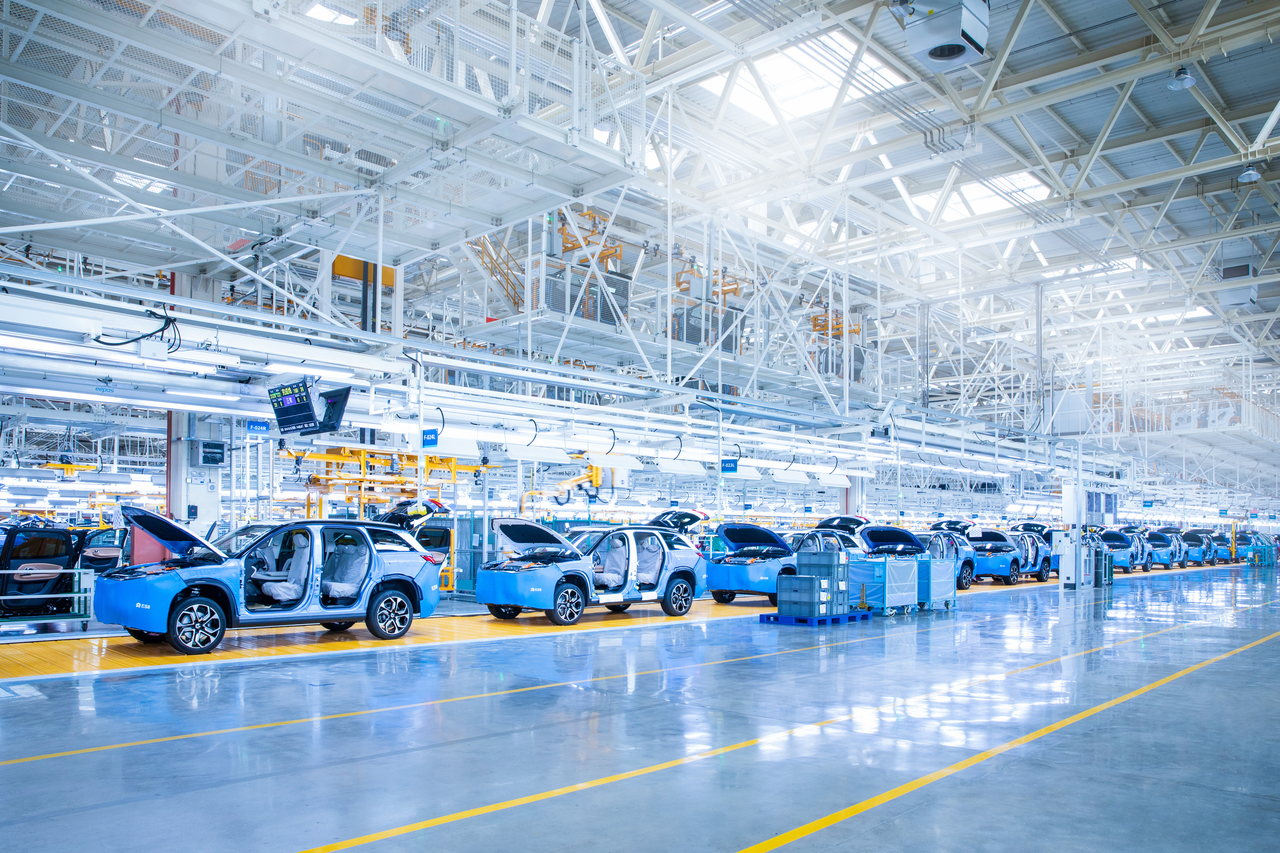
These aren’t slide-deck numbers. They’re happening on factory floors right now.
The logic is a feedback loop: deploy AI in production, generate real-world data from those deployments, use the data to improve the models, then feed better models back into production. Tencent’s in-house large model is deployed across 900+ internal use cases. Baidu, Alibaba, and ByteDance are all doing the same thing.
AI improves production → faster industry creates new problems → new problems drive AI research → better AI further improves production. Every turn of the flywheel, both sides get stronger.
The Data Problem Nobody Talks About
Whether that flywheel keeps spinning comes down to one thing: data.
The high-quality text data on the internet is running out. Ilya Sutskever, OpenAI’s former chief scientist, put it plainly: “We have one internet.” Nature published an entire piece on how AI is consuming the stock of human-generated data. Growth is slowing, but AI’s appetite keeps expanding.
Then there’s the pollution problem. AI-generated content is getting mixed into training datasets. Through recursive iteration, this creates contamination chains that degrade model performance — researchers call it “model collapse.” Training AI on AI-generated content is like making a photocopy of a photocopy. Each generation loses a little more fidelity.
The internet has more content than ever, but the actual information density isn’t growing. A huge chunk of what’s being produced is AI-generated — redundant, derivative, and hollow. More data, less signal.
China’s situation looks different. Industrial environments produce data constantly: sensor readings, production logs, quality control parameters, equipment telemetry. This is first-party, real-world data. No tail-eating problem. As long as the factories are running, fresh data keeps flowing.
Tencent said it bluntly: “High-quality data, broad ecosystems, and real-world scenarios will be the key factors that separate the winners from the rest.”
That’s the sentence that matters.
The Electricity Constraint
There’s another constraint people tend to overlook: power.
US data centers consumed 183 TWh of electricity in 2024 — over 4% of the nation’s total. Goldman Sachs projects demand will double by 2027 compared to 2025, leaving a gap of 47 gigawatts. That’s equivalent to the entire power consumption of nine Miamis. Nearly half of all new data center projects are being delayed because there simply isn’t enough power. Microsoft even struck a deal to purchase 100% of the output from the restarted Three Mile Island nuclear plant for the next 20 years.
China, by contrast, generates 2.6x more electricity than the US. Its renewable energy capacity is 4.4x larger. Green power in western China costs $0.03 per kWh — a quarter to a fifth of US rates.
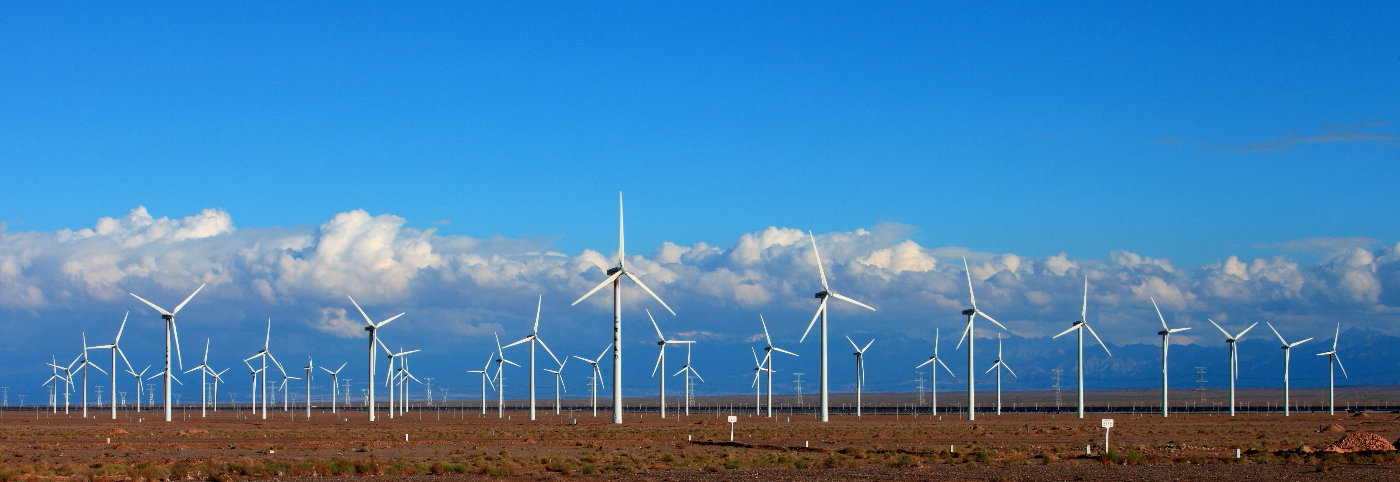
AI needs compute. Compute needs electricity. This isn’t a technology problem. It’s an infrastructure problem.
So What Is AI Actually For?
Back to the original question.
When tech giants are hoarding Nvidia GPUs, when AI companies are outbidding residential users for electricity, when hundreds of billions of dollars are flowing into model training — it’s worth asking: what’s the point of all this?
AI that writes articles, generates images, produces videos, or chats with you is useful, sure. But if that’s all AI can do, it’s an entertainment product with better marketing.
People need physical things. Food, clothing, housing, medicine, transportation. An article doesn’t feed anyone. Real productivity gains — more goods produced, faster production, lower costs, greater efficiency — require AI to walk onto the factory floor, into the supply chain, into every physical process where things actually get made.
The pursuit of AGI isn’t wrong. A general intelligence that adapts to a wide range of challenges would be genuinely transformative. But AGI divorced from real-world application is a castle built on air. Without data from the physical world, without problems that emerge from actual use, the model just loops over the same internet-scale text, eventually consuming its own output.
China isn’t abandoning AGI. It’s building the path toward it on top of reality. AI solves concrete problems first. Each solution generates data and experience. Step by step, the system moves closer to general intelligence. Slower, maybe. But each step lands on solid ground.
The 2026 Stanford AI Index Report noted something worth paying attention to: the performance gap between top US and Chinese models is down to 2.7%. DeepSeek-R1 matched the best American models for the first time in February 2025. The foundation-layer gap is shrinking, not growing.
That means China’s application-driven approach hasn’t left it behind on fundamentals. If anything, the compounding advantage of more real-world scenarios and more real-world data is making its position stronger over time.
Not a Zero-Sum Game
A personal thought before wrapping up.
I don’t think this is a story where one side wins and the other loses. AI is too big for any single country to dominate completely.
The US advantage in fundamental research, frontier models, and compute clusters is real and significant. China’s advantage in having the world’s most complete industrial base, the largest deployment surface, and the infrastructure to generate data and power at scale is equally real. Both paths have logic. Both have risks.
The US risk: burn through hundreds of billions of dollars, discover that AGI is a much farther target than expected, and find there aren’t enough real-world applications to sustain the spending until you get there. The money runs out before the road ends.
China’s risk: move fast on applications but fall too far behind on foundation models, hitting a ceiling where the application layer can’t compensate for weaknesses at the base.
But the current data suggests China’s foundation models aren’t falling behind. The gap is narrowing. The application surface is expanding. A flywheel is already turning.
AI ultimately comes back to a fundamental question: who is it for?
Not for investor pitch decks. Not for research papers. Not for the wow factor on social media.
It’s for people. For their work, for their lives. More goods, faster production, lower costs, better living standards.
That’s the metric that actually matters when judging which road goes further.
Sources
- Stanford HAI, AI Index Report 2026 (full PDF): hai.stanford.edu, April 2026
- Stanford AI Index — Technical Performance (US-China 2.7% gap): hai.stanford.edu
- US vs. China private AI investment ($285.9B vs. $12.4B): nerdleveltech.com
- OpenAI losses and burn rate: Fortune, CNBC, The Register (quarterly loss estimate)
- Meta Reality Labs losses and 30% metaverse budget cut: CNBC, LA Times, TechSpot
- AI data exhaustion (Nature): nature.com, December 2024
- Model collapse research (Nature): nature.com, July 2024
- Ilya Sutskever, “Pre-training as we know it will end” (NeurIPS 2024): IT Home
- China industrial robot installations — 295,000 units (IFR): ifr.org (PDF), China Daily, September 2025
- China smart factory data (35,000+ basic, 8,200+ advanced, 500+ excellence-level): gov.cn (MIIT), Baidu (MIIT press conference), 2025–2026
- US data center power demand doubling by 2027 (Goldman Sachs): goldmansachs.com, May 2026
- Microsoft–Three Mile Island 20-year nuclear power deal: NPR, Data Center Dynamics
- Tencent Hunyuan model deployed across 900+ internal scenarios: Tencent Cloud, January 2026
- Big Tech $650B+ AI infrastructure capex in 2026: TechCrunch
- China power generation and renewables capacity: CarbonCredits, US EIA
